
Myth vs. Truth: the real cost of cash in public transit
Cash has long been seen as the safest, most dependable way to collect fares. It doesn’t rely on connectivity, bank cards, or smartphones. For many agencies, especially smaller or regional systems, cash feels familiar and inclusive—something everyone understands and can use.
But familiarity doesn’t equal efficiency.
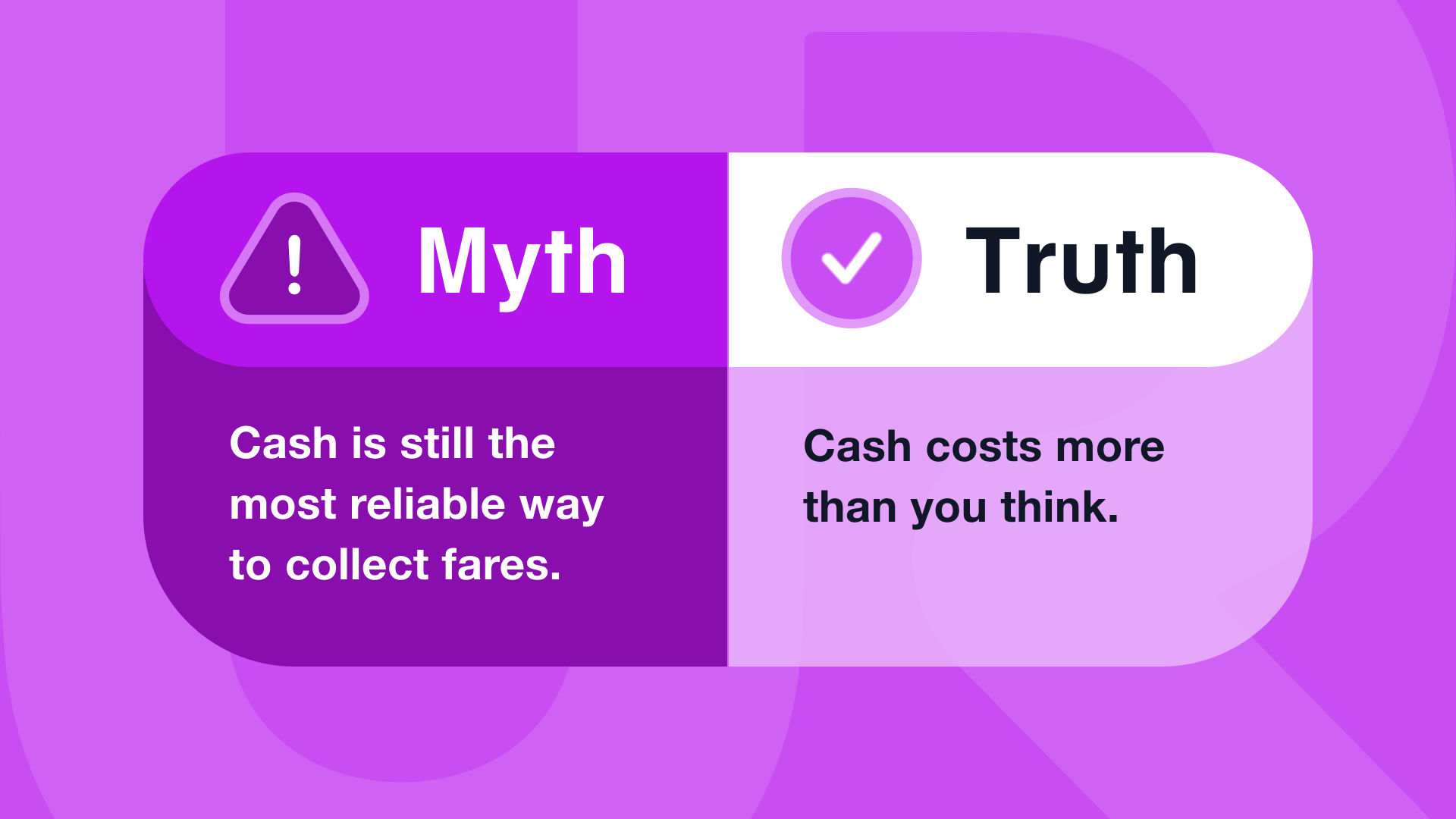
Myth: Cash is still the most reliable way to collect fares.
Truth: Cash costs more than you think.
When agencies look closely at the full lifecycle of cash handling, the numbers tell a very different story.
The hidden drain on fare revenue
On the surface, cash payments seem simple: riders pay, drivers accept, revenue is collected. Behind the scenes, however, cash sets off a complex and costly chain of activity.
Once collected, cash must be:
- Retrieved from vehicles or stations
- Transported securely
- Counted and reconciled
- Audited and reported
- Protected against loss, theft, and error
When labor, logistics, security, and processing are factored in, cash handling can consume 10–15% of total fare revenue. That’s not a rounding error—it’s a structural drain on agency finances.
In an environment where farebox recovery is already under pressure, losing that much revenue to handling costs directly limits an agency’s ability to invest in service quality, coverage, or frequency.
Cost per ride tells the story
Looking at cost per transaction makes the comparison even clearer.
Cash and legacy smart card systems typically cost $0.30–$0.50 per ride when all operational expenses are included. That adds up quickly across thousands—or millions—of trips per year.
Digital-first fare models, by contrast, can reduce transaction costs to less than $0.10 per ride. There’s no physical handling, no manual reconciliation, and far fewer touchpoints where delays or errors can occur.
Over time, that difference translates into meaningful savings—especially for agencies operating on tight margins.
Reliability isn’t just about payment
Cash is often defended as “reliable” because it works when technology fails. But reliability in modern transit is about more than whether a payment can be accepted in the moment.
True reliability means:
- Faster boarding and reduced dwell time
- Accurate, real-time revenue reporting
- Fewer disputes and reconciliation issues
- Lower risk exposure for staff and operators
Cash slows vehicles down, increases operational complexity, and introduces safety concerns for both drivers and riders. In contrast, digital payments—contactless cards, mobile wallets, account-based systems—support smoother operations and more predictable outcomes.
Inclusion without the overhead
A common concern is that moving away from cash leaves riders behind. In practice, digital-first does not mean cash-only riders are excluded. It means agencies can offer multiple low-cost access points—including prepaid cards, mobile options, and retail reload partnerships—without building their entire system around cash handling.
The goal isn’t to eliminate choice. It’s to eliminate unnecessary cost.
A smarter definition of reliability
Reliability today is about systems that scale, adapt, and protect limited public funds. Cash may feel dependable because it’s familiar, but familiarity can mask inefficiency.
As agencies rethink fare collection, the question is no longer whether cash still works. It’s whether continuing to rely on it makes financial sense.
For many transit systems, the answer is increasingly clear: the most expensive fares are the ones paid in cash.










.png)
.png)


.png)


.png)